Natural Forest Management
Mistakes and remedies
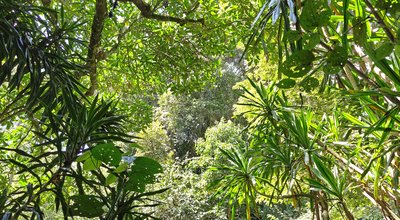
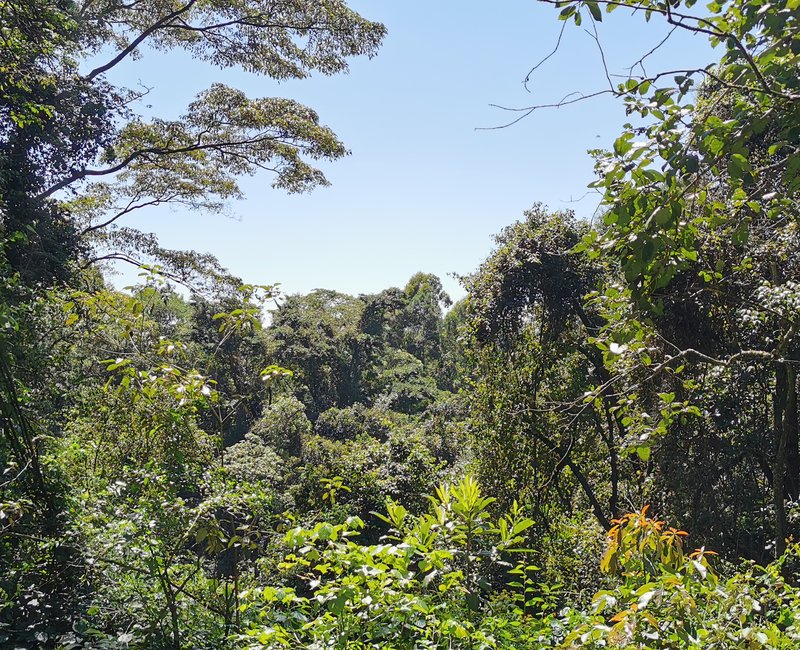
Years ago a distinguished visiting botanist was kind enough to give us some advice on how to manage Malewa Forest. He drew our attention to the great diversity of indigenous plants and trees in such a limited area, recommended we should avoid excessive human intervention, and, in particular, warned against introducing any exotic species. He argued that the forest itself was a complex and resilient ecosystem and he advocated, essentially, that we should allow it to manage itself. Since we were working overseas at the time his advice was exactly what we wanted to hear.

I remain convinced that the botanist was not wrong. We have, however, had to learn additionally that forest management requires balancing minimal human intervention with active protective measures against various threats.
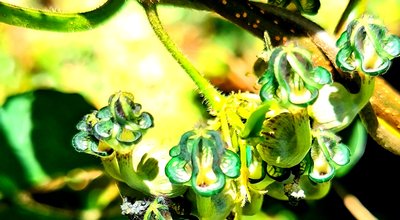
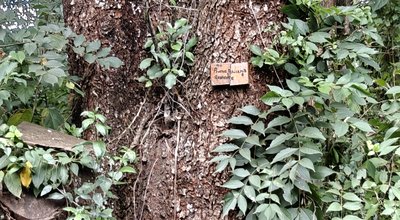
One obvious threat is on the boundaries which have to be securely fenced and patrolled in whatever way is possible and economical. We share one boundary with a neighbour who has made charcoal in the dry season despite the obvious fire risk. Knowledgeable thieves, indeed, have entered the forest and cut strips of bark from our Prunus africana trunks. We have had fencing itself stolen.
Another huge threat which we underestimated was the problem of invasives. The canopy, a world of its own, of branches, leaves, buds, flowers and fruits, is safe enough from major change and the ground layer of ferns and fungi also remains relatively immune from any sudden collapse. It is the understorey which proved to be vulnerable.
An invasive called Cestrum aurantiacum, a shrub in the potato family Solanaceae, took hold while we were not paying attention. This species from Guatemala was brought to Kenya in the 1920s probably as a pot plant with a pretty yellow flower. The shrub itself is toxic and toxic to its neighbors but birds and other pollinating agents like its yellow flowers. Its propagation has consequently been exponential in certain districts of Kenya, especially Tigoni, and, in particular, within a few years of the botanist's visit to Malewa, it took over the understorey of the forest. We were faced with the huge task of rooting it all out, shrub by shrub, tree trunk by tree trunk. The mass of toxic woody material removed from the forest understorey occupied the dimensions of a tennis court. The forest management lesson of timely intervention had been well and truly learnt.
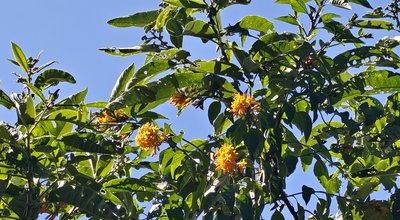
Unfortunately the story of the forest's understorey vulnerability continued after having dealt with the Cestrum aurantiacum. Herbs, shrubs, creepers and young trees are all engaged in a competition for survival in the dimness and darkness beneath the canopy. Needless to say, there are a few winners and a lengthy index of losers. The winners in Malewa Forest's case proved to be the evergreen shrub Piper capense and two species of the herbaceous perennial Acanthus, Acanthus eminens, native to tropical Africa, and the East African Acanthus pubescens. These plants, often aiding each other to find the light, became dominant in the understorey to the extent that further human intervention to limit their success was required.
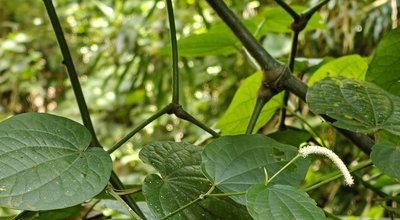
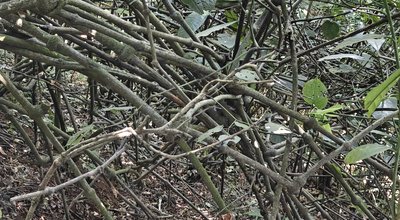
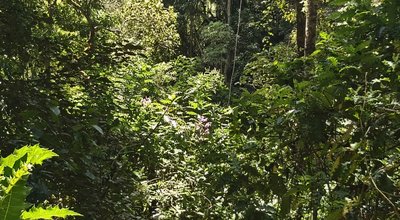
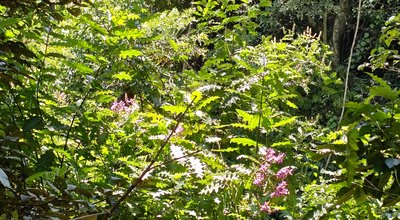
Because the understorey had become dominated by these species we began a programme of reducing their growth and even rooting some out in order to allow space for other African indigenous species to be planted. With the botanist's warning still ringing in our ears we have proceeded with this necessary human intervention cautiously, section of the forest by section of the forest. This work is ongoing, as is the vigilance to ensure that no more Cestrum aurantiacum or other invasives become reestablished.