About
Malewa Forest should be considered as a remnant of the tropical upland dry/moist super-forest which once stretched from the Kapiti plains to the highlands of the Aberdares and Mount Kenya, of which less than 1% remains.
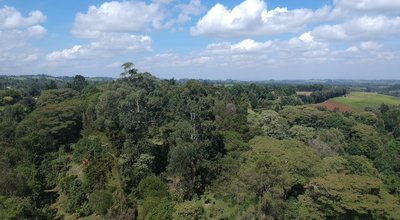
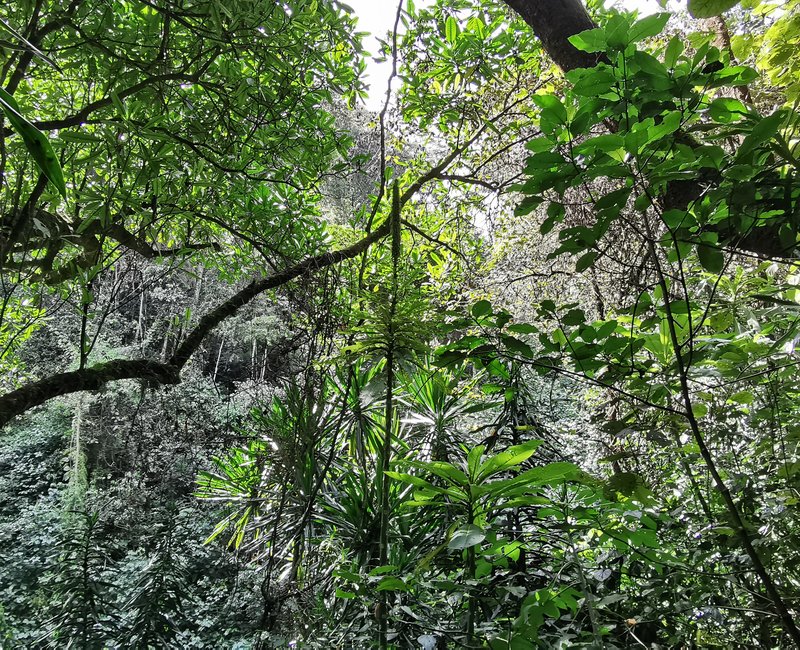
The 6 acre property is best described as a natural afromontane dry/moist forest, with a closed canopy. The elevation is 2100m or 6900ft and the average annual rainfall is around 900mm. The mean monthly OAT is 18C (12C to 24C, frost free). The soil is classified as humic Nitisol, a deep, well-drained, reddish-brown friable clay.
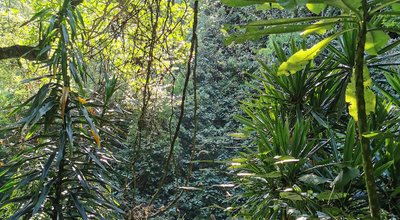
The topography of the forest is that of a steep-sided valley or donga, with several perennial springs emerging at its lowest point.
The tallest canopy-forming trees which grow on all sides and at the head of this valley include the following: Croton megalocarpus. Croton macrostychus. Ficus sur. Ficus thonningi. Prunus africana. Warburgia ugandensis. Syzygium guieense. Macaranga kilimandscharica. Macaranga capensis. Fraxinus excelsior. Cussonia spicata. Cordia africana. Casaeria battisscombei. Albizia gummifera. Brachylaena huillensis. Xymalos monospora. Richiea albersii.
Towering Newtonia buchananii and Tabernamontana stapfiana have their roots near a stream which flows from the springs. Stands of Cyathea manniana occupy the head of the stream.
Understory trees include Erythrina abyssinica, Kigelia africana, Vangueria volkensii. Ehretia cymosa. Ekebergia capensis. Erythrococca bongensis.
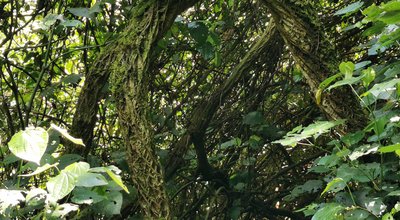
The forest is exceptionally endowed with lianas and climbers: Trilepsium madagarascariense, Tiliacora funifera, Jasminum abyssinicum. Ancient and extensive coils of Gouania longipetela are also dominant but the most notable climber is the singular Embelia keniensis, Critically Endangered on the IUCN Red List.
Under-shrub species are numerous on the forest floor, as are a wealth of fungi.
All around the forest there are farm growing tea, maize, potatoes and horticultural crops.